LASER RUST REMOVAL / GUIDE
HOW DOES LASER RUST REMOVAL WORK?
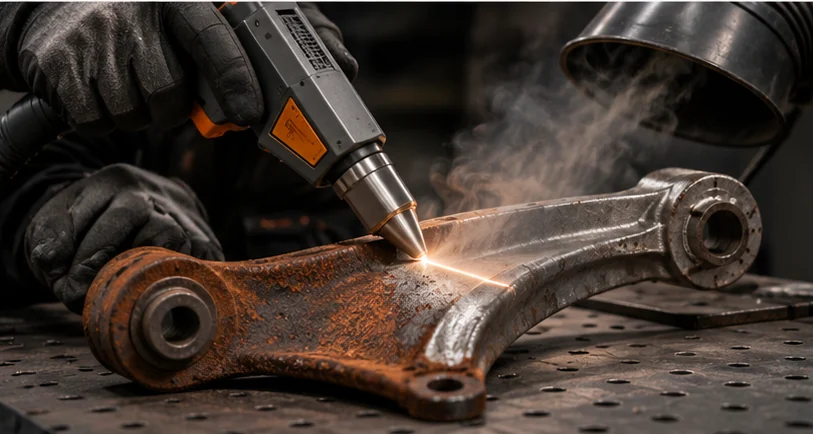
A scanning laser deposits energy into rust and surface contamination. Depending on the layer and laser settings, material can detach by rapid heating, ablation or thermal shock. Pulsed laser cleaning is often favoured for delicate, selective removal because the operator can control short energy bursts and limit heat transfer. Continuous-wave systems may suit certain robust, high-area tasks but require different control of heat input.
Surface rust versus deep corrosion
Orange surface oxidation and loose corrosion products may be removable without physically abrading the base material. However, laser cleaning cannot replace steel already lost to pitting, thinning or perforation. Structural corrosion must be inspected and repaired appropriately; an attractive bare-metal finish is not proof a component is sound.
Why laser settings matter
Power, pulse parameters, scanning speed, overlap, focus and substrate all affect the outcome. Too much energy can heat, mark or alter a surface. Claims of guaranteed “zero damage” are misleading; the correct process is selected and tested for the specific part.
Is laser rust removal better than grinding or sandblasting?
For localised work or complex shapes it can reduce abrasive contact and blasting-media waste. For very large areas, tightly bonded coatings or areas needing a defined blast profile, mechanical or abrasive methods can remain appropriate. See our laser cleaning versus sandblasting comparison.
For Cork and Munster vehicle owners: we assess the target surface, access and amount of corrosion, then discuss the right cleaning and protective finish rather than promising one treatment for everything.
Wondering about budget? Read our laser cleaning cost guide for Cork before requesting a tailored quote.
Illustrations on this page are computer-generated examples of the technology, not photographs of completed customer work.