Bubbling paint along seams
Paint lifting in a line along a wing, door edge or tailgate seam usually means corrosion is travelling inside the joint rather than sitting on top of it.
Rust on a car, van or 4x4 is rarely a single event. It begins as oxidation on bare or damaged steel, spreads under paint and seam sealer where moisture sits, and eventually changes the thickness of the metal itself. That is why two rust patches of the same visible size can need completely different work: one may be a surface film sitting on sound steel, the other the top of a perforation that has been growing for years behind a trim panel.
Understanding which one you are looking at changes what you should do next. Cleaning a surface film is a preparation job. Cutting out and repairing weakened metal is a structural job. Coating over either without checking the condition underneath only hides the problem until the next wet winter.
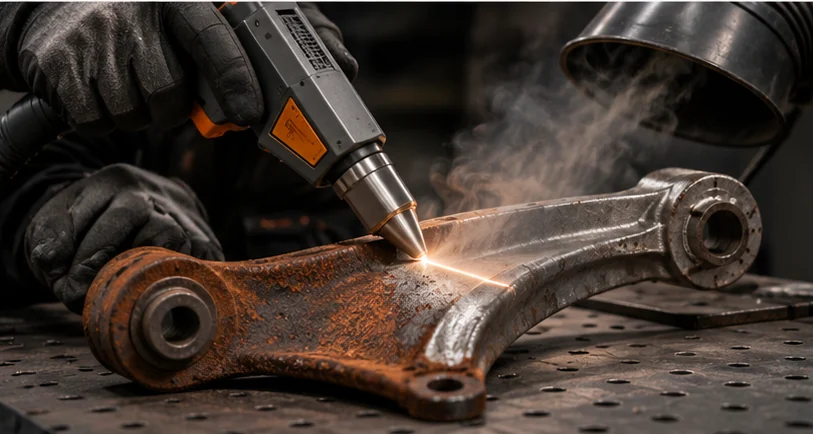
Irish driving conditions create a particular combination of moisture and salt exposure that accelerates corrosion.
Vehicle corrosion is driven by water, oxygen and salt together. Ireland supplies plenty of all three. Atlantic air keeps ambient humidity high for most of the year, so underbody panels and cavities rarely dry out fully between journeys. Winter gritting leaves salt deposits in seams, on subframes and along the inner edges of arches, and coastal air adds airborne salt even on roads that are never gritted.
Short local journeys make it worse. A car that never reaches full operating temperature keeps moisture inside exhaust systems, sills and cavity sections, and the airflow that would dry a long motorway run never happens. It is common to see a low-mileage vehicle with more advanced underside corrosion than a higher-mileage one that spends its life at motorway speed.
The result is that rust is rarely limited to the panel you can see. By the time bubbling appears on a wing or tailgate, moisture has usually been working along a seam behind it.
An NCT inspection assesses structural corrosion visually. Spotting these early gives you options.
Paint lifting in a line along a wing, door edge or tailgate seam usually means corrosion is travelling inside the joint rather than sitting on top of it.
Original underseal that has cracked, lifted or gone soft is holding water against the floor pan instead of sealing it out.
Surface rust on subframes, arms and mountings is common, but flaking or pitting suggests the metal is losing section.
Water inside the cabin usually points to a leak path, and a permanently damp floor pan corrodes from the inside out.
A screwdriver that sinks into a sill or chassis rail is telling you the metal has already perforated and needs repair, not coating.
There is no single best method. Suitability depends on the material, the coating and what has to survive afterwards.
Non-contact and highly controllable. Removes rust, oxides and suitable coatings from accessible surfaces without abrasive media, so seals, bearings and machined faces nearby are easier to protect. Slower on large flat areas and dependent on line of sight.
Fast over large areas and effective at profiling metal for paint, but it is aggressive, creates media waste and needs heavy masking of anything that must not be touched.
Wire brushes, discs and grinders reach awkward corners cheaply. Useful for localised work and for dressing back around repairs, though hard to apply consistently across a whole panel.
Acid-based converters can stabilise light surface rust where blasting or laser access is impossible. They are not a substitute for removing heavy scale and they must be compatible with whatever coating follows.
Comparing the two most common choices in more detail: laser cleaning versus sandblasting.
It is worth being direct about this, because it is where most rust work goes wrong. Removing corrosion does not restore metal that is no longer there. If a chassis rail, sill or mounting point has perforated or thinned beyond safe limits, the correct answer is cutting out the affected section and welding in sound material to an appropriate standard.
Laser cleaning is excellent at exposing what you are dealing with. It removes the layer of rust and old coating that hides the true condition of the steel, which makes an honest repair decision possible. It does not add thickness back, and it will not turn a structural failure into a cosmetic one.
A sensible sequence is consistent: inspect, clean to expose the metal, assess, repair where necessary, prepare the surface, then protect. Skipping to protection is what produces the thick black underseal that looks solid in a photograph and hides active corrosion underneath.
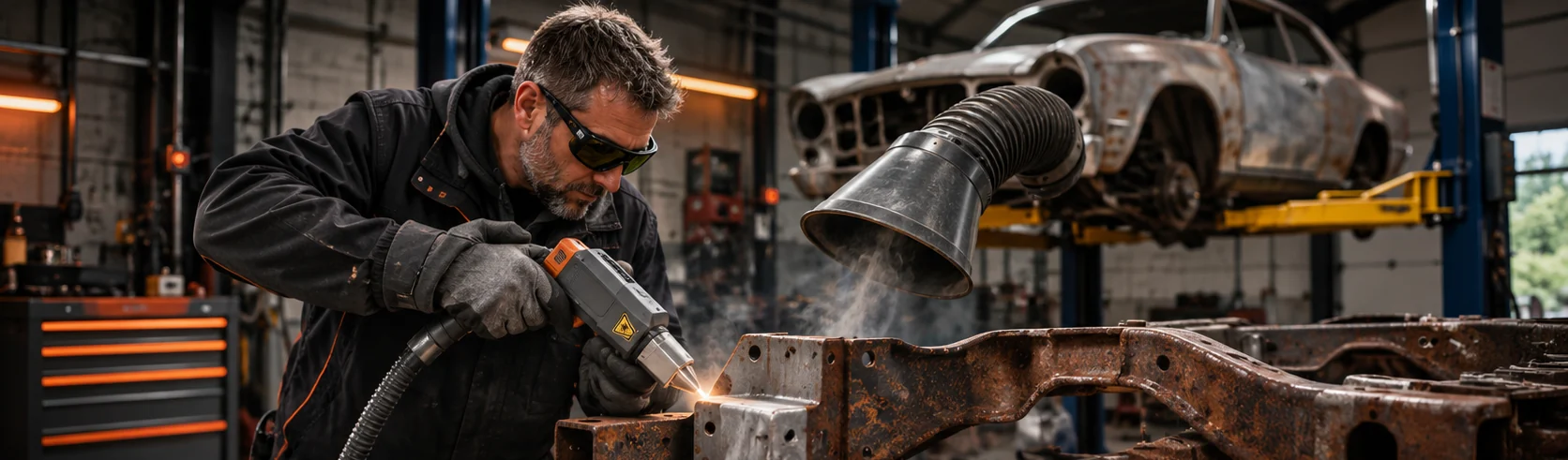
Every protective product fails for the same reason: it was applied over moisture, contamination or active corrosion.
Once the metal is clean and dry, protection is a layered decision. A compatible primer goes on bare steel to seal it before any topcoat. A protective finish then handles abrasion and water on exposed surfaces. Cavity waxes are used inside sills, pillars and crossmembers where no paint will ever reach. Underbody coatings take the direct hit from grit, salt and standing water.
Compatibility matters more than brand. A primer designed for one system may not bond to another, and a coating applied over a wax residue will lift within a season. Drying time matters too, especially in Irish conditions: applying sealer to metal that is still holding moisture traps the problem in place for years.
Maintenance is part of the system. An annual check of the underside, a rinse of salt deposits after gritting season and prompt attention to any new stone chips will extend the life of the work considerably. More on the sequence here: our preparation and protection process, and the treatment tiers on the protection packages page.
No responsible quote exists without seeing the condition, and anyone offering a fixed price for unseen rust is guessing.
A component on a bench is straightforward. The same component on a complete vehicle may need trim, wheels, liners or exhaust sections removed first.
Surface film, pitting and perforation are three different jobs with three different time estimates.
A single suspension arm and a full floor pan take very different amounts of cleaning time, even at the same hourly rate.
Cleaning, repair, priming, cavity treatment and finishing are separate stages. Choosing which ones a vehicle actually needs keeps the cost honest.
For a breakdown by job type, see the laser cleaning cost guide for Cork.
Bare steel can flash over within days in damp air. Once corrosion has lifted paint or sealer, it usually progresses faster because moisture stays trapped against the metal.
It removes corrosion from accessible surfaces and seams. Metal that has perforated or lost thickness needs cutting out and repair welding instead.
No. Coating over active corrosion or damp contamination traps the problem. Preparation and drying come first.
Send photos, the vehicle details and where the corrosion is located through the enquiry form. Scope and price are confirmed after assessment.
Describe the vehicle, the part and where the rust is showing and we can discuss a sensible next step.